
The Big Red One Is One of the Most Authentic WWII Movies Ever Made
Prefer to watch instead of read? Watch Now
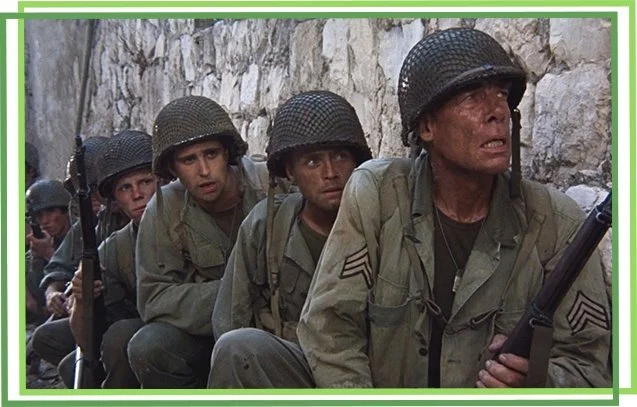
If you love war movies with a hard edge, movies like Full Metal Jacket, Apocalypse Now, and Inglourious Basterds, there’s an insanely underrated World War II movie you should know called The Big Red One. It does not have the scale or polish of a movie like Saving Private Ryan, but it has something most war films cannot buy. Firsthand experience.
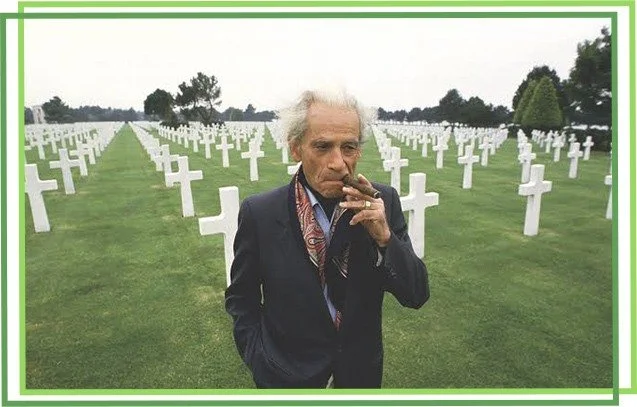
Writer and director Samuel Fuller served with the U.S. Army’s 1st Infantry Division during World War II, the unit nicknamed “The Big Red One.” He fought through North Africa, Sicily, France, Belgium, Germany and Czechoslovakia, then later turned those memories into this 1980 film. Fuller described the movie as “fictional life based on factual death,” and that is really the best way to look at it.
The characters are fictional, but a lot of what happens to them came from things Fuller actually experienced or heard about during the war. That gives the movie a strange authenticity even when the production itself looks cheap.
A War Movie Built From Memory
Lee Marvin plays a veteran sergeant leading a small group of soldiers played by Mark Hamill, Robert Carradine, Bobby Di Cicco and Kelly Ward. They move from one battle to the next while replacements constantly come and go around them.
There is no giant mission driving the whole movie. It is more like take this hill, cross that bridge, deal with that sniper, move on. At first, that structure can feel a little strange, but it starts to make sense once you realize Fuller is not trying to teach you World War II.
He is showing you what it felt like from the ground, where the big picture matters a lot less than whatever is trying to kill you next. That is one reason the movie reminded me of Band of Brothers. It feels episodic, almost like somebody compressed an entire season of a war series into one movie.
The Weird Stuff Is Part of What Makes It Feel Real
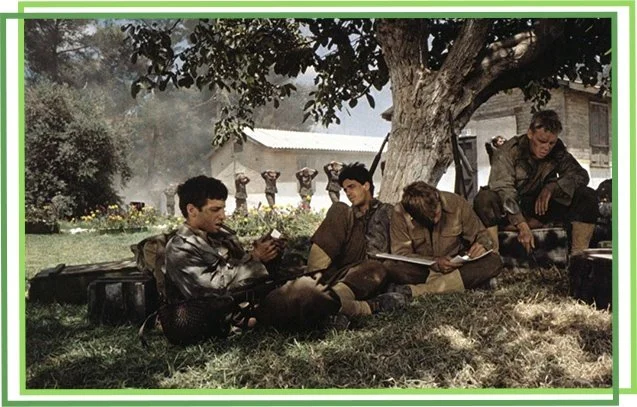
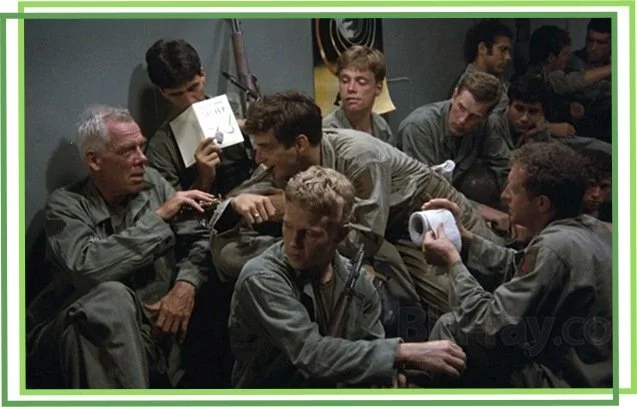
Some of the strangest moments in The Big Red One are also the ones that feel the most authentic. Robert Carradine’s character discovers someone reading a book he wrote before the war, without even realizing the book had been published. That actually happened to Fuller.
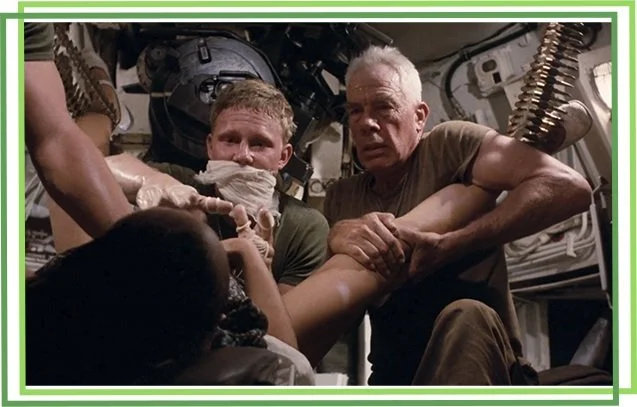
In another scene, soldiers hide in holes while tanks drive directly over them. They start screaming because the tanks are so loud nobody can hear them anyway. Then there is the scene where a woman gives birth inside a tank while the soldiers improvise with ammunition belts and condoms.
It all sounds too weird to be true, which is kind of the point. Real war produces moments a screenwriter might never think to invent. Fuller understood that war can be horrifying, absurd and darkly funny all at the same time.
Somehow This Movie Is Rated PG
One of the strangest things about The Big Red One is that it is rated PG. Do not take that as a recommendation to watch it with young kids.
The movie is not particularly bloody and it is not loaded with profanity, but the attitude toward violence is harsh. These soldiers have been around death so long that they talk about it like it is just part of the job. At one point Marvin says, “We don’t murder, we kill.” That idea comes up again and again throughout the movie.
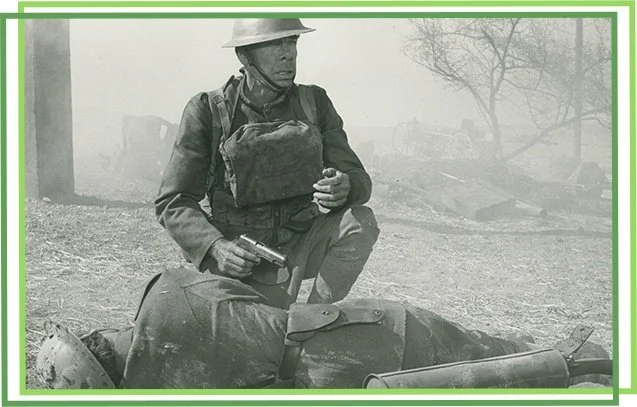
The opening scene makes the point especially well. Marvin kills a German soldier and then finds out World War I had already ended. A few hours earlier, killing that man was his duty. Now it is something else entirely.
Fuller keeps poking at that line between killing and murder, enemy and human being, war and peace. That is a lot more interesting to me than just watching another huge battle scene.
Lee Marvin Makes the Movie Feel Even More Legitimate
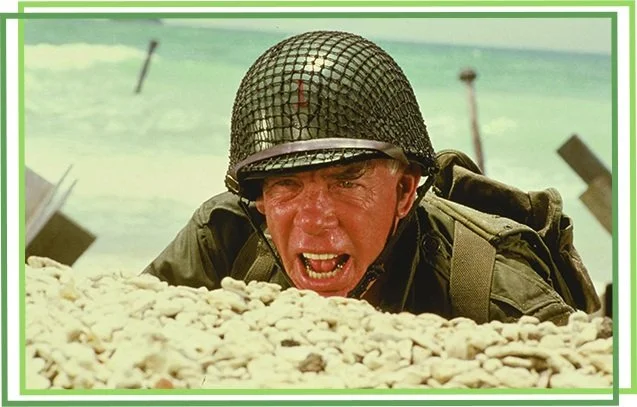
Fuller was not the only World War II veteran involved. Lee Marvin served with the Marines in the Pacific and was seriously wounded during the Battle of Saipan. So you have one World War II combat veteran directing another in a movie about what soldiers are actually like under extreme conditions.
Marvin does not play the sergeant like a Hollywood hero. He does not give big inspirational speeches or constantly explain how he feels. He just keeps moving, and that restraint works really well here. It makes the character feel like someone who has spent so much time in combat that surviving the next few minutes is more important than stopping to explain what any of it means.
What It Lacks in Money, It Makes Up for in Experience
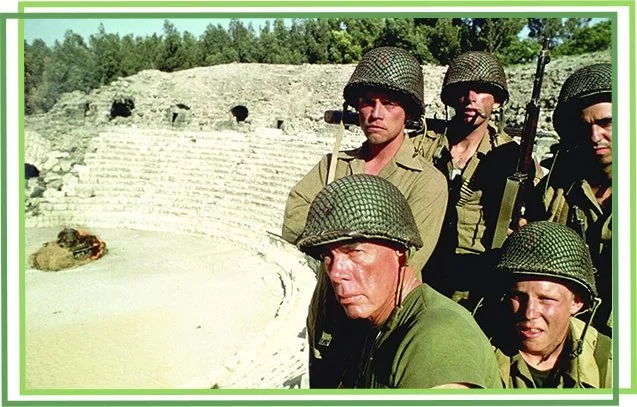
The biggest drawback with The Big Red One is pretty obvious. It looks cheap at times. The movie covers huge stretches of Europe and North Africa, but the production did not have the money to make every location feel convincing. There are long sections that are unbelievably beige, and the color palette occasionally looks like tuna on toast.
You also do not get massive armies, huge sweeping battlefield shots or the kind of spectacle you would expect from a modern war movie. But Fuller had something a bigger production could not manufacture. He remembered being there, and that firsthand experience is ultimately much more interesting than the size of the production.
Near the end of World War II, Fuller’s unit entered the concentration camp at Falkenau in Czechoslovakia. Fuller had a 16mm camera his mother had sent him, and his commanding officer told him to document what they found. So he did.
Actual footage survives that Fuller shot himself. When The Big Red One eventually reaches similar territory, you are watching a filmmaker recreate something he had already witnessed through a camera lens decades earlier. Knowing that gives the movie a kind of weight no production budget can fake.
Which Version Should You Watch
The original theatrical cut runs just under two hours and is absolutely worth watching. There is also The Big Red One Reconstruction, assembled after Fuller’s death using surviving footage and his notes. It runs close to an hour longer and gives the movie’s episodic structure more room to breathe.
If you are buying a physical copy, I would look for the Reconstruction. It feels a little more like the sprawling movie Fuller originally intended to make. If the theatrical cut is the version you can find, though, I would not hesitate to watch it. The thing that makes the movie special is there in both versions.
Why It Is Worth Seeing
There are bigger World War II movies, better looking ones and definitely more spectacular ones. But there are not many that feel quite like The Big Red One. Samuel Fuller was not trying to recreate war from research. He was recreating it from memory.
The movie can look old, it can look cheap and some of it can even feel a little strange. Underneath all of those limitations, though, is something far more valuable. You are watching a guy who was actually there tell you what he remembers, and to me, that makes The Big Red One one of the most interesting World War II movies I have ever seen.
Prefer to Watch Instead?
If you’d rather watch than read, I cover The Big Red One in the video below, with clips from the movie and a closer look at the strange true stories and firsthand experiences that make it so unique.
Watch my video review of The Big Red One:
